Game fish · trout and salmon family (char)
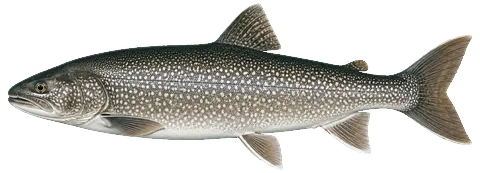
Lake trout
Salvelinus namaycush
- Minnesota lakes
- 116 lake trout lakes, second only to Alaska
- Water
- Never warmer than about 65°F
- Lifespan
- Grows slowly but lives long, with a reported maximum age of 50
- Spawns
- Fall, usually at night over large rocks and cobble
- Minnesota record
- Lake Trout (before 1980, weight not certified): 43 lb 8 oz — Lake Superior near Hovland, Cook County, 1955
Where lake trout have been recorded
31 of the 1,788 Minnesota lakes on this site with fish records list lake trout, across 6 counties. Tap a dot to open that lake’s depth map.
Recorded here Other lakes with fish records
How we know
- 24lakes where a DNR fisheries survey caught them
- 15lakes the DNR has stocked since 2016; 7 of them are listed on that stocking alone
A lake can appear in more than one line. A lake that isn’t listed may still have them: records exist only where someone caught, netted or stocked them.
Inland lakes on this list run from 18 to 7,957 acres (median 528) and from 60 to 450 ft deep (median 100 ft).
How many turn up in DNR surveys
Minnesota DNR lake surveys use standard gear: gill nets set offshore for 24 hours (the main gear for walleye, northern pike, yellow perch, cisco, whitefish and trout), trap nets set near shore (the main gear for bluegill, crappie and bullheads), and on some lakes electrofishing, most often for bass. The DNR reports each gear separately, as fish per net set. These rates come from the newest standard survey of each lake on this site, 1959–2025 — a measure of how many fish a lake holds, not how many an angler will catch.
- Found in
- 5 of 1579 lakes surveyed this way
- Typical rate
- 0.50 per gill net where found
- Highest
- 1.0 per gill net
- Method
- fish per gill net set
“Typical” is the median across the lakes where the survey caught at least one. Each gear catches different fish, so the rates are not added together. A single survey is a snapshot of one season.
Highest survey rates on this site
- Fraser Lake, Lake County 1986 1.0
- Big Trout Lake, Crow Wing 2024 0.58
- Alder Lake, Cook 2015 0.50
- Grindstone Lake, Pine 2025 0.44
- Sagamore Mine, Crow Wing 2023 0.14
Fish per gill net set, with survey year. Survey effort and season differ between lakes.
Often found with
Share of these lakes that also list each fish.
How to recognize it
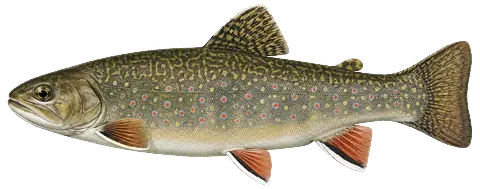
White or yellowish spots on a dark green to light gray body, a deeply forked tail and a small adipose fin. No orange, pink or red spots, and the inside of the mouth is white.
Don’t confuse it with
Life in a Minnesota lake
Few states still have lake trout that reproduce on their own, and Minnesota is one. They need deep, cold, clear lakes with rocky bottoms, found mostly in the northeast and the far north-central part of the state, where they often share the top-predator role with northern pike. A lake has to hold cold water all summer and offer open-water prey like cisco.
Lake trout cruise open water after prey and chase it down; adults mostly eat fish, cisco above all, though some populations eat plankton all their lives and stay small. Eggs fall between rocks and hatch after about four months.
Source: the sources below.
Rules and eating
Check the rules before you keep fish. Each lake page shows the regulations that apply there, and the Minnesota DNR fishing regulations page is the official source. Before eating fish from a particular lake, check the Minnesota Department of Health’s fish consumption guidance.
All 31 lakes with lake trout
Show every lake, by county
Cook County 10
Alder Lake, Bearskin Lake, Birch Lake, East Bearskin Lake, Flour Lake, Gabimichigami Lake, Greenwood Lake, Loon Lake, Magnetic Lake, Trout Lake
Crow Wing County 3
Itasca County 5
Bluewater Lake, Caribou Lake, Pokegama Lake (Main Bay), Pokegama Lake (Wendigo), Trout Lake
Lake County 4
Pine County 1
St. Louis County 8
Burntside Lake, Cruiser Lake, Iron Chief Complex Lake, Little Trout Lake, Mukooda Lake, Sabin Lake (Embarrass Mine), Spring Lake, Trout Lake
Sources
- Minnesota DNR: Lake trout
- Minnesota DNR: Ice fishing for lake trout
- Minnesota DNR: Trout
- Minnesota DNR: North Shore fishing (trout and salmon identification)
- Minnesota DNR: Fish species classification for the lake index of biological integrity (native and non-native species)
- Minnesota DNR lake surveys (LakeFinder) — lake records, stocking and survey catch rates. Minnesota DNR contributed to this work.
- Minnesota DNR state record fish (certified and non-certified weight lists; angler names are not reproduced here)