Game fish · trout and salmon family (char)
Brook trout
Salvelinus fontinalis · also called brookie, speckled trout
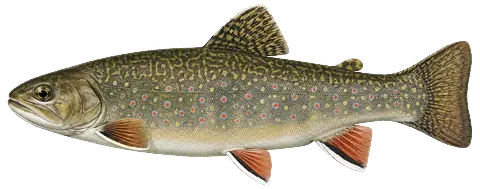
- Typical size
- 8 to 10 in
- Spawns
- October and November, in redds over spring-fed gravel
- Needs
- Clean, cool, clear water rich in oxygen
- Lifespan
- Usually 3 to 4 years
- Minnesota record
- 6 lb 5 oz, 24 in — Pigeon River, Cook County, 2000
Where brook trout have been recorded
19 of the 1,788 Minnesota lakes on this site with fish records list brook trout, across 7 counties. Tap a dot to open that lake’s depth map.
Recorded here Other lakes with fish records
How we know
- 7lakes where a DNR fisheries survey caught them
- 16lakes the DNR has stocked since 2016; 12 of them are listed on that stocking alone
A lake can appear in more than one line. A lake that isn’t listed may still have them: records exist only where someone caught, netted or stocked them.
Inland lakes on this list run from 6 to 2,433 acres (median 42) and from 15 to 220 ft deep (median 40 ft).
How many turn up in DNR surveys
Minnesota DNR lake surveys use standard gear: gill nets set offshore for 24 hours (the main gear for walleye, northern pike, yellow perch, cisco, whitefish and trout), trap nets set near shore (the main gear for bluegill, crappie and bullheads), and on some lakes electrofishing, most often for bass. The DNR reports each gear separately, as fish per net set. These rates come from the newest standard survey of each lake on this site, 1959–2025 — a measure of how many fish a lake holds, not how many an angler will catch.
- Found in
- 6 of 1579 lakes surveyed this way
- Typical rate
- 2.8 per gill net where found
- Highest
- 16 per gill net
- Method
- fish per gill net set
“Typical” is the median across the lakes where the survey caught at least one. Each gear catches different fish, so the rates are not added together. A single survey is a snapshot of one season.
Highest survey rates on this site
- Little Andrus Lake, Cass 1989 16
- Camp A Lake, St. Louis 2014 4.5
- High Lake, St. Louis 2024 3.0
- Gypsy Lake, Lake County 2025 2.5
- LaSalle Lake, Hubbard 2020 0.17
- Kabekona Lake, Hubbard 2023 0.08
Fish per gill net set, with survey year. Survey effort and season differ between lakes.
Often found with
Share of these lakes that also list each fish.
- Rainbow trout 74%
- White sucker 63%
- Bluegill 37%
- Brown trout 37%
- Splake 32%
- Cisco 21%
- Fathead minnow 21%
- Golden shiner 21%
- Largemouth bass 21%
- Northern pike 21%
- Yellow perch 21%
How to recognize it
A dark green to nearly black back with light wavy lines and speckles, light sides and belly, a black-spotted dorsal fin and a square tail. Some spots are red with blue rims. The scales are so small it looks scaleless.
Don’t confuse it with
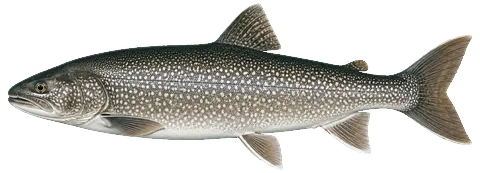
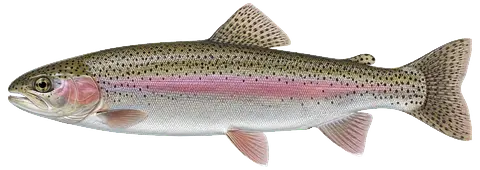
Life in a Minnesota lake
Eastern Minnesota's small streams and headwaters are the brook trout's native range, and the DNR stocks them in lakes as well. Most reach maturity within a year and then spawn each autumn; depending on how cold the water is, eggs hatch after two to five months.
Brook trout are sensitive to stream degradation, sediment and warming water. The DNR stocks splake, a brook trout × lake trout cross, in some northern lakes.
Source: the sources below.
Rules and eating
Check the rules before you keep fish. Each lake page shows the regulations that apply there, and the Minnesota DNR fishing regulations page is the official source. Before eating fish from a particular lake, check the Minnesota Department of Health’s fish consumption guidance.
All 19 lakes with brook trout
Show every lake, by county
Cass County 1
Cook County 1
Crow Wing County 3
Hubbard County 2
Lake County 4
Pine County 1
St. Louis County 7
Camp A Lake, Clearwater Lake, Cub Lake, Dry Lake, High Lake, Little Dry Lake, Sand Lake
Sources
- Minnesota DNR MinnAqua species profile: Brook trout
- Minnesota DNR: Trout
- Minnesota DNR Fishing in the Neighborhood: Target species
- Minnesota DNR MinnAqua: Fishes of Minnesota and fish family facts (PDF)
- Minnesota DNR: Fish species classification for the lake index of biological integrity (native and non-native species)
- Minnesota DNR lake surveys (LakeFinder) — lake records, stocking and survey catch rates. Minnesota DNR contributed to this work.
- Minnesota DNR state record fish (certified and non-certified weight lists; angler names are not reproduced here)